Dive deep into the history and poetry of Anna Clyne's DANCE.
If you’re relatively new to the concert hall and curious about how contemporary classical music connects to poetry and deeper meaning, you’re in for a treat with Anna Clyne’s DANCE for cello and orchestra. In this blog-post we’ll gently unpack:
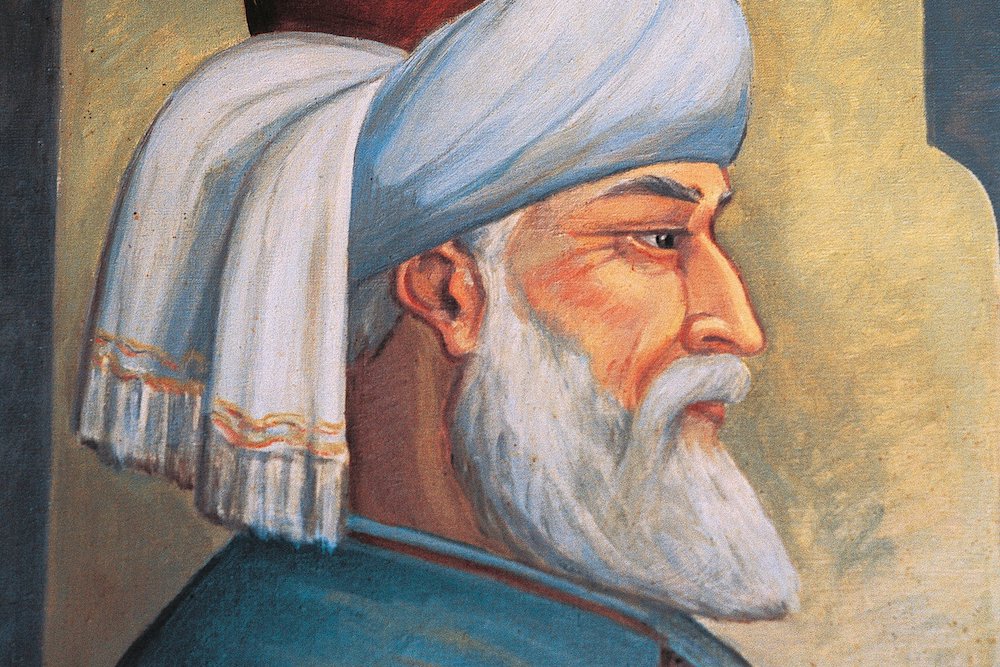
who the poet behind the work is (Jalāl al‑Dīn Rūmī),
how his short poem gave structure and inspiration to Clyne’s concerto, and
how you might listen for the poetry in the music as you hear it (or attend a performance).
1. Who was Rumi and what does the poem say?
Rumi (often spelled Rūmī) was a 13th-century Persian poet and Sufi mystic, born around 1207 CE and died in 1273 CE. He lived much of his life in what is now Turkey (Konya), and his poetry explored themes of spiritual longing, love, transformation, and the dance of the soul.
The poem that inspires DANCE is very short — just five lines in English translation (though of course many words are richer in the original). Here it is:
“Dance, when you’re broken open. Dance, if you’ve torn the bandage off. Dance in the middle of the fighting. Dance in your blood. Dance, when you’re perfectly free.”
What does that mean?
The poem invites us to dance not only when times are easy, but especially when they are hard — when we’re wounded, exposed, “in the middle of fighting,” or even in our own blood.
The idea of dancing here is metaphorical: a letting-go, a movement, a surrender, a celebration of life in all its states (pain, conflict, freedom).
The final line “when you’re perfectly free” suggests that once you’ve embraced all that – brokenness, fighting, blood – you arrive at a kind of freedom. The dance becomes an expression of that freedom.
So, Rumi gives us a poetic arc: from vulnerability and struggle to release and freedom.
2. How does Anna Clyne’s DANCE connect to that poem?
Here are some key facts and connections:
DANCE is a cello concerto (solo cello + orchestra) composed in 2019 by Anna Clyne.
It was commissioned for cellist Inbal Segev and premiered on 3 August 2019 at the Cabrillo Festival of Contemporary Music in Santa Cruz, California.
Crucially: the five-movements of the concerto are each named after one line of Rumi’s poem.
Here’s the movement list with their titles:
“when you’re broken open”
“if you’ve torn the bandage off”
“in the middle of the fighting”
“in your blood”
“when you’re perfectly free”
In an interview, Clyne explains she was drawn to the poem because it is short, has repetition, clear form (five lines) and a strong physicality (“broken open,” “in your blood”) that she felt compelling. She says the structure helped her create a work in which each movement has its own personality but is also part of a larger journey.
Also interesting: although the piece is called DANCE, Clyne says it's not simply a suite of dances in the usual sense. The dance is metaphorical.
3. Listening guide: how the poetry shows up in the music
If you attend a performance of DANCE (or listen to the recording), here are some ideas of what to listen for — mapped to the poetic lines.
Movement I – “when you’re broken open”
Clyne begins quietly and tenderly. The solo cello often floats in the high register, and the orchestra supports with gentle, sustained textures.
The idea: imagine being psychologically or emotionally “broken open” — fragile, exposed. The music reflects that with openness and fragility.
Tip for listening: Notice the quiet moments, the high cello lines, the feeling of something vulnerable.
Movement II – “if you’ve torn the bandage off”
Now the music shifts: described as “Earthy and Fiery” by Clyne. The cello plays more aggressively, double stops, faster, more rhythmic drive.
The “bandage” image suggests healing is undone, wounds exposed — the music shows some rawness and energy.
Listen for the solo cello leading and perhaps the orchestra surrounding and reacting.
Movement III – “in the middle of the fighting”
More reflective, but with the sense of conflict or tension. Clyne uses repeating patterns (ground bass) reminiscent of Baroque techniques, which serve to underpin the solo line.
The “fighting” here might be internal, or metaphorical — the music invites you to feel a struggle but also contemplation.
As a listener: pick up on the feeling of push‐and‐pull, of an internal battle being expressed.
Movement IV – “in your blood”
This movement builds layers; Clyne explores dense textures, orchestral echoes of the cello, a kind of “looping” or layering effect.
The phrase “in your blood” suggests something deep, ingrained, vital — this movement gives a sense of that bodily, primal quality.
In listening: you might feel the cello deeply grounded, perhaps darker timbres, surroundings from the orchestra that feel rooted.
Movement V – “when you’re perfectly free”
The finale revisits earlier ideas and gives a sense of resolution. Clyne writes that she actually composed this movement first and then built the others around it.
The music often sings a melodic line that is simple yet powerful; the feeling is one of release, freedom, openness.
For you listening: sense the difference from the earlier movements. There’s a breath of freedom, maybe less tension, more singing, more space.
4. Why this matters (especially for first time concert-goers)
Poetry and music can feel like two separate worlds — but here we have a nice intersection: a poem by Rumi that gives shape and meaning to a contemporary concerto. This can help you listen with a story in mind.
You don’t need to know every detail of the score or technique — just let yourself be carried by the journey: openness → rawness → struggle → embodied depth → freedom.
When you approach the music armed with some imagery (broken open, bandage off, fighting, in your blood, free) you might feel more connected, less passive.
Also worth noting: Clyne is a composer who values melody, emotion, and accessibility even in a modern piece. One reviewer says “for those who fear contemporary music, relax—Clyne’s work is tonal, and features recognizable melodies …”
So if you’re unsure about contemporary classical music, DANCE can be a gateway: friendly, meaningful, emotionally rich.
5. Some practical tips before you hear the piece
Arrive a little early and take a moment to read the movement titles so you know you’re following the five-line poem.
Try closing your eyes for a few moments during each movement to focus on what the cello is “saying” or how the orchestra supports or responds.
After the concert or recording, ask yourself: Which movement did I connect with most? Why? Did I feel the “fighting”? The “blood”? The “freedom”?
Listen to a recording like this one once at home, then again at the concert — you’ll notice new things.
Bear in mind: modern orchestral works often have textures, unusual instrumental colours, new sounds — this is okay. Don’t worry about “understanding everything.” Let the feeling come.
In summary
DANCE by Anna Clyne is a remarkable example of how poetry can give shape and meaning to a piece of contemporary music. By drawing on Rumi’s five-line poem, the work invites us on a journey from vulnerability through struggle to freedom. For the newer listener, it offers both emotional immediacy (you feel and hear something) and conceptual depth (you can track the arc). Bring curiosity, maybe glad ears, and let yourself dance with the music.
Enjoy the listening — and perhaps let yourself feel moved, uplifted, and newly attuned to the interplay of words and sound.
Weekly newsletter
No spam. Just the latest releases and tips, interesting articles, and exclusive interviews in your inbox every week.
Thank you! Your submission has been received!
Oops! Something went wrong while submitting the form.
Explore concerts, recitals, and events to connect you with music, your community, and yourself.


.png)


