
Cello Counterpoint (2003) is scored for eight cellos and can be played by a soloist with the other parts pre-recorded or by a Cello Octet. It is in three movements, fast, slow fast.
The first and last movements are both based on a similar four chord cycle that moves ambiguously back and forth between c minor and Eb major. This harmonic cycle is treated extremely freely however, particularly in the third movement. As a matter of fact, what strikes me most about these movements is that they are generally the freest in structure of any I have ever written. The second, slow movement, is a canon in Eb minor involving, near the end of the movement, seven separate voices.
Cello Counterpoint is one of the most difficult pieces I have ever written, calling for extremely tight, fast moving rhythmic relationships not commonly found in the cello literature.
The piece is a little more than 11 minutes in duration and was co-commissioned by the Koussevitzky Foundation in the Library of Congress, the Royal Conservatory in The Hague and Leiden University, for cellist Maya Beiser.
© Steve Reich

Steve Reich has been called “the most original musical thinker of our time” (The New Yorker) and “among the great composers of the century” (The New York Times). Starting in the 1960s, his pieces It’s Gonna Rain, Drumming, Music for 18 Musicians, Tehillim, Different Trains, and many others helped shift the aesthetic center of musical composition worldwide away from extreme complexity and towards rethinking pulsation and tonal attraction in new ways. He continues to influence younger generations of composers and mainstream musicians and artists all over the world.
Double Sextet won the Pulitzer Prize in 2009 and Different Trains, Music for 18 Musicians, and an album of his percussion works have all earned GRAMMY Awards. He received the Praemium Imperiale in Tokyo, the Polar Music Prize in Stockholm, the Golden Lion at the Venice Biennale, the BBVA Foundation Frontiers of Knowledge award in Madrid, the Debs Composer’s Chair at Carnegie Hall, and the Gold Medal in Music from the American Academy of Arts and Letters. He has been named Commandeur de l’Ordre des Arts et des Lettres in France, and awarded honorary doctorates by the Royal College of Music in London, the Juilliard School in New York, and the Liszt Academy in Budapest, among others.
One of the most frequently choreographed composers, several noted choreographers have created dances to his music, including Anne Teresa de Keersmaeker, Jirí Kylián, Jerome Robbins, Justin Peck, Wayne McGregor, Benjamin Millepied, and Christopher Wheeldon.
Reich’s documentary video opera works—The Cave and Three Tales, done in collaboration with video artist Beryl Korot—opened new directions for music theater and have been performed on four continents. His work Quartet, for percussionist Colin Currie, sold out two consecutive concerts at Queen Elizabeth Hall in London shortly after tens of thousands at the Glastonbury Festival heard Jonny Greenwood (of Radiohead) perform Electric Counterpoint, followed by the London Sinfonietta performing his Music for 18 Musicians. “There’s just a handful of living composers who can legitimately claim to have altered the direction of musical history and Steve Reich is one of them,” The Guardian.
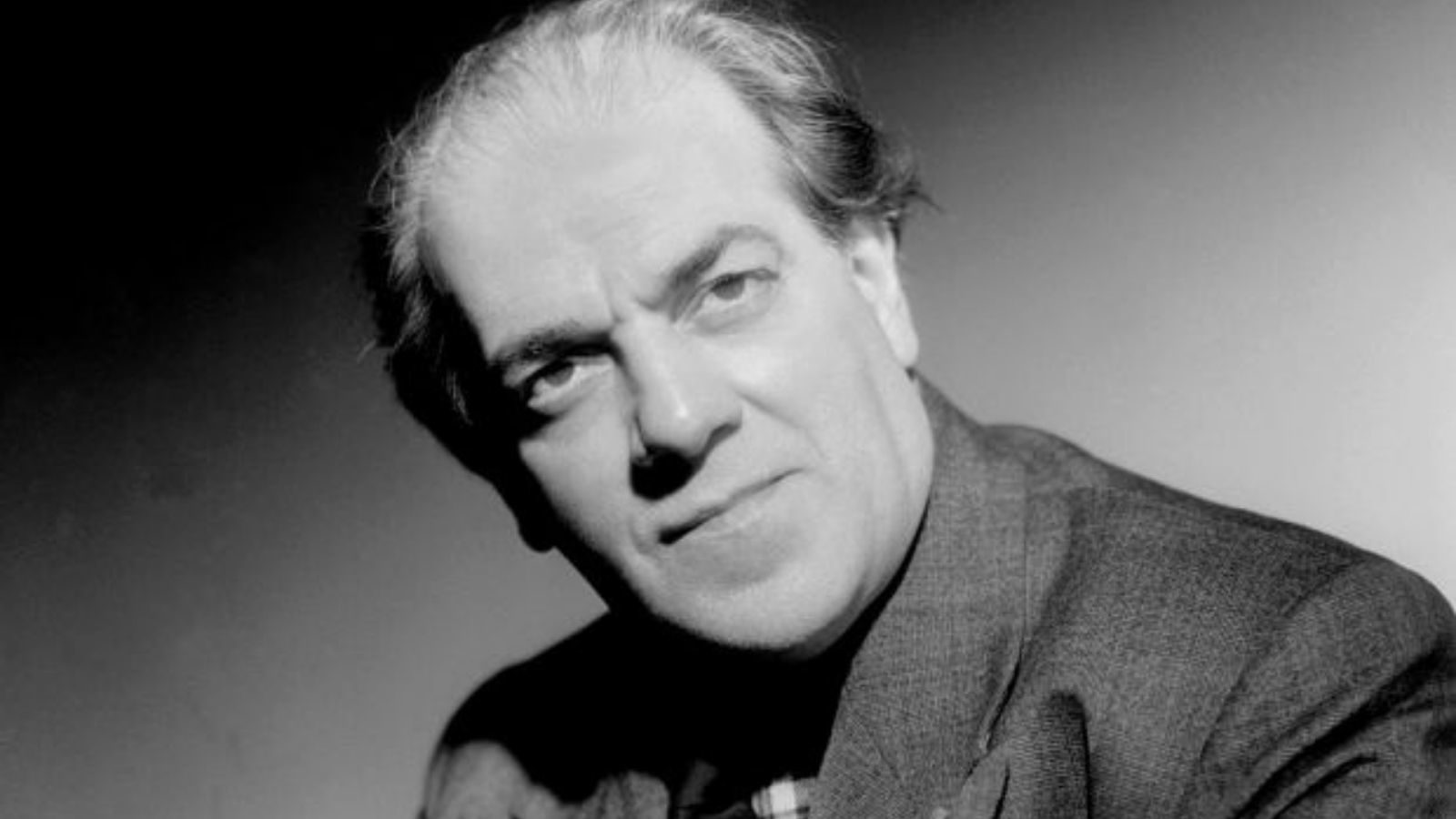
Heitor Villa-Lobos (1887-1959) has been described as “the single most significant creative figure in 20th century Brazilian art music.” His quest to develop musical compositions using indigenous Brazilian elements fueled a number of ethno-musicological excursions into the northeastern states of Brazil. Allegedly, cannibals once captured him; such colorful tales naturally served to underscore his deep connection to his native lands.
“My music is natural,” he liked to say, “like a waterfall.” However, at various points in his life Villa-Lobos resided in Paris, and J.S. Bach became a lifelong idol. In fact, he considered Bach as “a mediator among all races,” and his Bachianas Brasileiras are a musical and cultural fusion of Brazilian folk and popular music with the inherited style of Bach. Composed between 1930 and his time in New York in 1945, this widely ranging series of nine suites for various combinations of instruments is decidedly among his most remarkable works.
The first of the Bachianas Brasileiras is dedicated to cellist Pablo Casals, and was written for a new and unusual form of chamber ensemble; a group of eight cellos.
Composed in 1930, Villa-Lobos gave each movement two titles, a “Bachian” and a Brazilian one. The premiere took place on 12 September 1932 in Rio de Janeiro in a concert dedicated to Walter Burle Marx. That performance, however, only featured two movements, the “Prelúdio” and the “Fuga.” The “Introdução” (Embolada)—a type of restless and rhythmically charged song performed by traveling musicians in northeastern Brazil—was added eight years later. The “Prelúdio” (Modinha) references a type of popular Brazilian love-song, while the “Fuga” (Conversa) is inspired by the “question and answer” conversations routinely improvised by Rio street musicians.

Heitor Villa-Lobos, (born March 5, 1887, Rio de Janeiro, Brazil—died November 17, 1959, Rio de Janeiro), Brazilian composer and one of the foremost Latin American composers of the 20th century, whose music combines indigenous melodic and rhythmic elements with Western classical music. Villa-Lobos’s father was a librarian and an amateur musician. Under the influence of his father’s weekly musical get-togethers, the boy became interested in music.
He learned to play cello (actually a modified viola) at age six and was inspired by music from Johann Sebastian Bach’s A Well-Tempered Clavier that was given to him by an aunt. While traveling with his family to various regions of the vast country, he also developed an interest in native Brazilian folk music.
When they returned to Rio de Janeiro, Villa-Lobos began associating and performing with the city’s popular musicians. He learned to play the guitar. He left home at age 18 because his widowed mother opposed his “delinquent” friends and wanted him to become a doctor. Instead, he became a musical vagabond, playing cello and guitar to support himself while traveling throughout the states of Espírito Santo, Bahia, and Pernambuco, absorbing Brazilian folk music and composing his own pieces.
During this period Villa-Lobos enrolled briefly at the Instituto Nacional de Música in Rio de Janeiro, but he was to continue his travels for three years. He returned to the city with a large group of manuscripts and an intimate knowledge of the Afro-Brazilian music of the country’s northern and northeastern regions. He began a serious study of the works of Bach, Richard Wagner, and Giacomo Puccini, whose influence can be noted in his compositions. In 1915 a concert in Rio de Janeiro featured his compositions, and his career was given a vital boost that same year when the firm of Artur Napoleão began publishing his music.
Although many critics initially attacked the dissonance and modernity of his work, he persisted in his efforts to merge Western music and the Brazilian vernacular tradition.
In 1919 he met the pianist Artur Rubinstein, who helped advance Villa-Lobos’s reputation by playing his music in concerts throughout the world. He composed ceaselessly (about 2,000 works are credited to him in all), and by the time of his first trip to Europe in 1923 he had produced a long list of compositions in every form, from solo pieces for guitar to trios, quartets, concerti, vocal music, and symphonies. The success of his first trip—he made Paris his home base for the remainder of the 1920s—encouraged him to organize and perform in a number of concerts; during this period he published more of his work and solidified an international reputation.
In Brazil for a performance in 1930, Villa-Lobos presented a plan for music education in the São Paulo school system and was appointed director of music education there. In 1932 he took charge of music education throughout Brazil. He established a conservatory for choral singing in 1942 and, with fellow composer Oscar Lorenzo Fernandez, cofounded the Brazilian Academy of Music in 1945. Between 1944 and 1949 he traveled widely in the United States and Europe, where he wrote music for several films, received many honours, and was much in demand as a conductor.
As mentioned above, Villa-Lobos’s works are characterized by a singular blend of Western classical music and Brazilian folk songs and rhythms. One of his best-known works is Bachianas brasileiras (written 1930–45), a set of nine pieces for various instrumental and vocal groups, in which a contrapuntal technique in the manner of Bach is applied to themes of Brazilian origin. A similar series of 14 works, composed between 1920 and 1929, bears the generic title Chôros (the choro is a Brazilian country dance). Each of his 12 symphonies alludes to a historic event or place. Among his many other works are two cello concerti (1915, 1955), Momoprecoce for piano and orchestra (1929), Guitar Concerto (1951), Harp Concerto (1953), Harmonica Concerto (1955), 16 string quartets, Rudepoema for piano solo (1926; orchestrated 1942), and the symphonic poems Uirapurú (1917), Amazonas (1929), and Dawn in a Tropical Forest (1954).
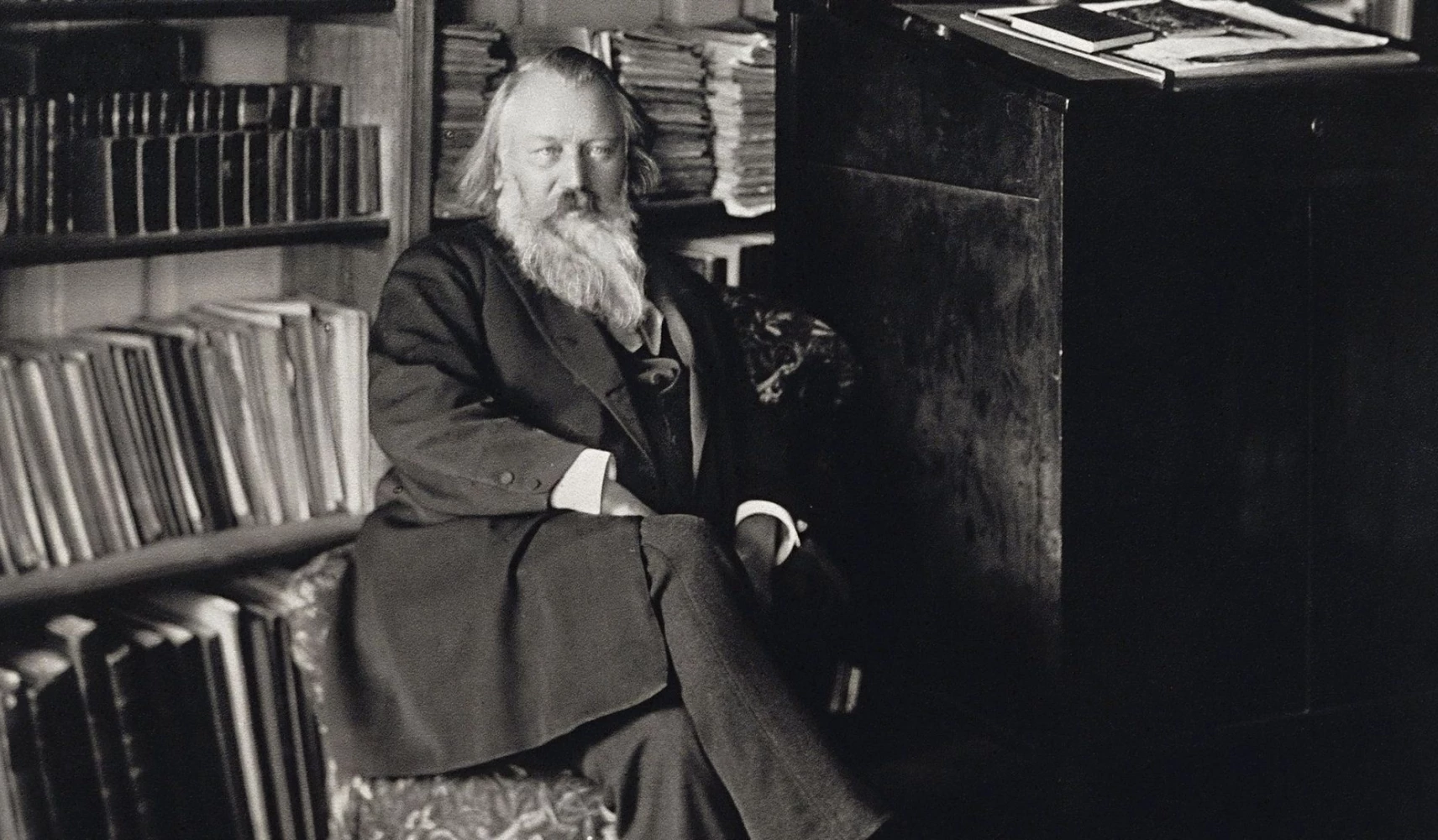
If historically serenades were considered music for entertainment, and they were, how did our ultra-serious Brahms come to write not one but two serenades? It seems out of character for this composer whose very earliest works were essentially large-scale and terribly earnest to consider creating a form of music that seemed to be at odds with his nature. The answer is really simple, and actually in keeping with his mindset. This was a young man quite in awe of the legacy of Beethoven, a budding composer who thought himself unworthy to carry on in the footsteps of the giant even though that was the road he instinctively wanted to travel.
The young Johannes took an easy detour, as accompanist to the Hungarian violinist Eduard Reményi. It was Reményi who arranged an introduction to violinist Joseph Joachim, who in turn urged Brahms to present himself to the Schumanns, Robert and his pianist wife Clara, in Düsseldorf. Greeted warmly by the two distinguished musicians, Brahms at 20 proceeded to overwhelm them by his playing of his earliest piano works -- the first two piano sonatas (C major and F-sharp minor) and the E-flat-minor Scherzo. The Schumanns found in his playing the same extraordinary qualities that had so impressed Joachim. About his compositions themselves, Robert's enthusiasm knew no bounds. “One has come from whom we may expect all kinds of wonders. His name is Johannes Brahms,” was only one of the older composer's effusive statements in a lengthy article he wrote about the gifted youth.
The modest, unassuming Johannes found it difficult to cope with Schumann's extravagant flattery. He expressed his concern in a letter to Schumann. “The open praise that you bestowed upon me has probably excited expectations of the public to such a degree that I do not know how I can come anywhere near fulfilling them,” he wrote. “Above all, it induces me to use extreme caution (my italics) in selecting pieces for publication. Of course, you understand that I strive with all my might to cause you as little embarrassment as possible.”
Extreme caution became the guiding principle of Brahms’ career. Because it was expected of him, he started a symphony, but it wasn’t realized for a full 20 years. He did produce the massive First Piano Concerto, but as for a purely symphonic work, he opted instead for a modest Serenade, and followed that one with another, the present piece in A major. Thus he contrived not to overplay ambition or fall short of expectations. Of course, by the time of the two Serenades, Schumann was gone, having suffered a tragic death in an asylum. But there was Clara Schumann, for whom he had a deep fondness (many say love), and he wanted to please her above most others.
If the first Serenade was a bit conservative and what we might call unBrahmsian, the second had all the stuff of the real Brahms, revealing the characteristics that make the composer’s music immediately recognizable. The lilt, the warmth, the gracious melodies, and the enlivening cross rhythms that give distinction to a work that essentially fits the definition of a serenade as music strictly for easy listening. Essentially, but far from entirely, for the central third movement of the five-movement work casts a long gray shadow on the charming movements before and aft. Cast in the key of A minor, the piece begins with the low strings (all are low inasmuch as Brahms scored the work without violins) in bare octaves presenting a theme that has a kind of Bach-like seriousness. This two-measure motif is destined to be almost ever present, either in the bass or above. It is not the only melodic idea in the movement, but it becomes a rich source of the kind of thematic transformation that was a life-long technique of the master.
As if to make amends for the third movement’s departure into un-serenade sobriety, Brahms tears loose in a fifth movement that fairly dances, ingratiates with a lovable oboe theme, and enlivens with all manner of orchestral brilliance augmented by the bright voice of the piccolo. A very happy ending indeed.
-Orrin Howard
.jpg)
One of the big "Three B's" of the classical music world, Johannes Brahms is most widely known by modern audiences for his melodic lullaby, but his influence goes much further afield than simple children's tunes.
The son of a lower middle class family, Brahms was born in Hamburg of the early 19th century; a scruffy port city filled with exotic traders and seedy traffickers alike. Although in an earlier era, it had been home to a number of fine musicians, it was, at the midpoint of the 19th century, a unseemly and unlikely a place for a future legend to arise as one might imagine. Although admittedly he was no child prodigy, he occasionally dislikened himself to the young Mozart, Brahms would tell listeners on later occasions that his father, a trained musician himself, often arranged Brahms' early concerts in the public bars of the town. Bars of that place and era doubled as houses of ill-repute; it was an entirely shocking inverse portrait of Brahms' life overlaid by evoking the measure of natural and wholesome adoration Wolfgang's father's evidenced for his child in securing him appointments to all the finest courts of Europe.
Ever the master auteur, the older Brahms doubtless spread these grim tales to enhance his standing in front of his easily shocked Victorian audiences; positing himself as a man who rose above mere circumstance to achieve a measure of real greatness in the competitive European music scene.
Even without the tall tales, Brahms' import to German culture was significant even in his own day. He was a composer made for Vienna of the Belle. He cast an exceedingly large shadow: stretching from his training in the traditions of the Classical era into the later-still Romanic era. Although of modest origins, Brahms connects together a number of rich threads in the musical world.
Rightly, he is remembered for his abilities as a composer and musician. Certainly, his requiems, cantatas, and symphonies are now considered fundamental listening. Over the course of his career, however, he became the defender of the traditional Classical style and his legacy is the imprint of his influence on the style and substance of his fellow composers. This was a struggle not easily or early attained either.
Brahms did not achieve success in his youth. As a performing pianist and as a composer, he made his living playing in cafes and composing hack-works for local performing groups. His father had wanted him to become an orchestral musician, but Brahms soon demonstrated a clear preference and talent for the pianoforte and at age seven he began studies with a pupil of Eduard Marxen, and eventually with Marxen himself. Marxen's deep understanding and fondness for the music of Bach and Beethoven influenced Brahms to a commitment toward the traditional styles of the mid-nineteenth century, and a lasting rejection of later nineteenth century modernism as represented by the music of Wagner and Liszt. As a matter of course, he could be nothing else.
In his early years, Brahms received instruction from a pupil of Mozart, Ignaz von Seyfried. He was a friend of Schubert and Schumann. He scuffled with Richard Wagner's New Romantics and considered Antonin Dvoržak as his prodigy and confidante. Gustav Jenner may have called him a grump and a curmudgeon, but men such as Johann Strauss II knew better: that to be a success in Vienna, you had to know Johannes Brahms, the grand homme of the Viennese classical scene, and to play in his court, you had to play by his rules.
While still in his early twenties Brahms met Joseph Joachim, the renowned violinist and the two became fast friends and often made joint concert tours through Europe. Through Joachim Brahms met Franz Liszt, and also Robert and Clara Schuman, who were to have perhaps the most profound influence on his musical and composing career. He remained close to the Schumanns, and spent much time with them, especially during Robert's decline into serious mental illness. After the death of Robert he remained close to Clara. Initially he was very much in love with Clara, fourteen years his senior, though she did not return his love. However they remained close friends for the remainder of her life. She premiered many of his compositions on her frequent concert tours. An affair with Agnes Siebold in 1858 at age 25 was the closest he would ever come to marriage.
Brahms had hoped to secure a permanent conducting position, or conservatory appointment, but though he secured several positions in various places, each failed for some reason, and he never succeeded in this ambition. In 1868 he settled permanently in Vienna, where he had established a wide circle of friends among the most famous and successful musical and cultural figures of his time.
The premier of his German Requiem in 1869, more than any of his previous works established his reputation as a significant composer. Throughout his career he composed prolifically for almost all instrumental combinations, as well as works for piano, chorus and solo voice. Many still appear regularly on today's concert programs. Most popular today perhaps are his German Requiem, his four symphonies, the Alto Rhapsody, and his chamber music. Brahms died at age 64 in Vienna, on April 3, 1897, of cancer of the liver, only a few months after the death of his dear friend, Clara Schuman.
.png)
Weekday Box Office & Administrative Offices
301 9th Street, Suite 302
Redlands, CA 92374
When visiting, please enter through Door 300.


