

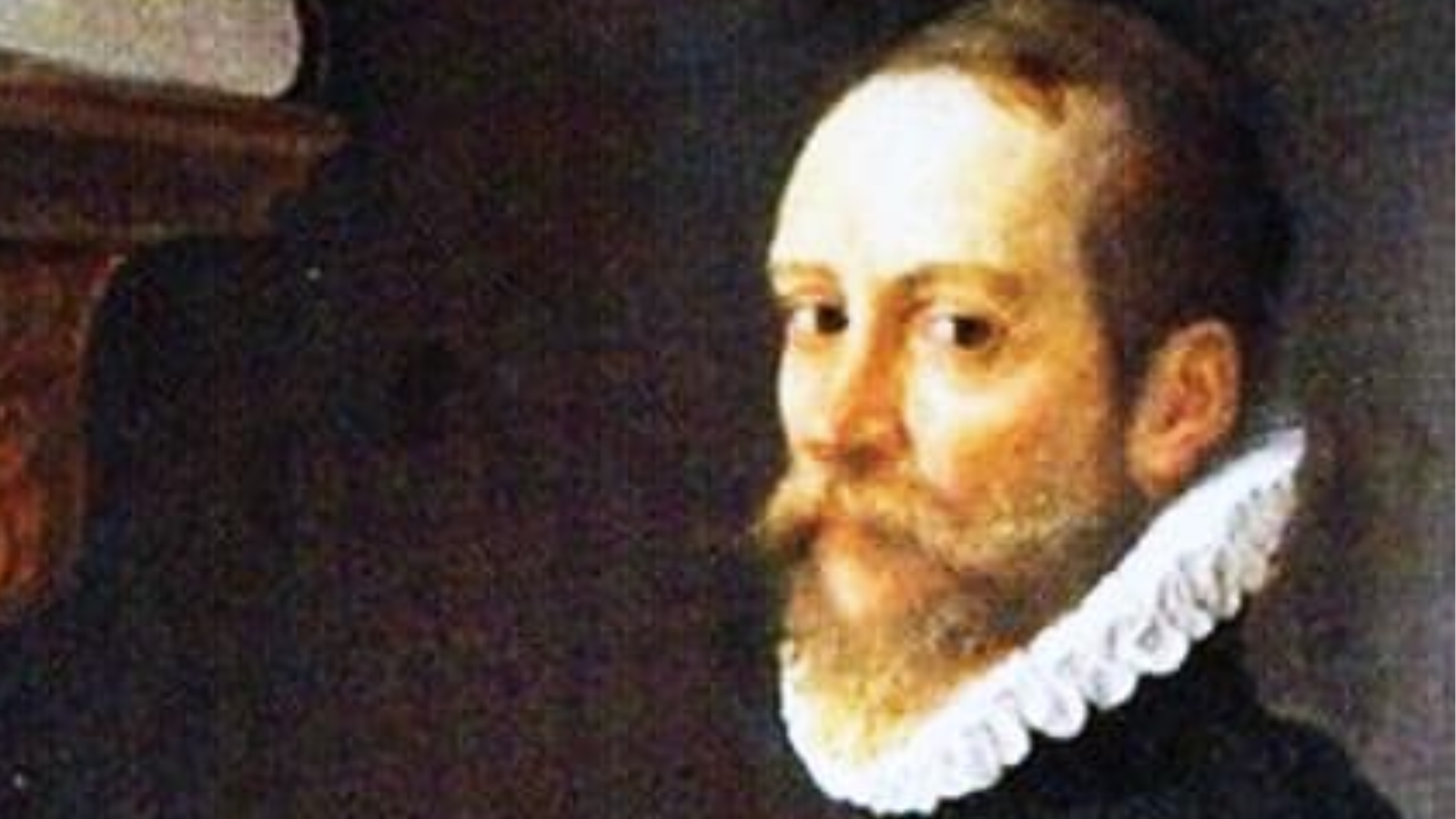
The music of Andrea Gabrieli (c. 1532–1585) represents the grandest peak of the Venetian Renaissance and serves as a vital bridge to the Baroque era. As the principal organist at St. Mark’s Basilica, Gabrieli’s compositions were uniquely shaped by the cathedral’s Byzantine architecture.
Key hallmarks of his style include:
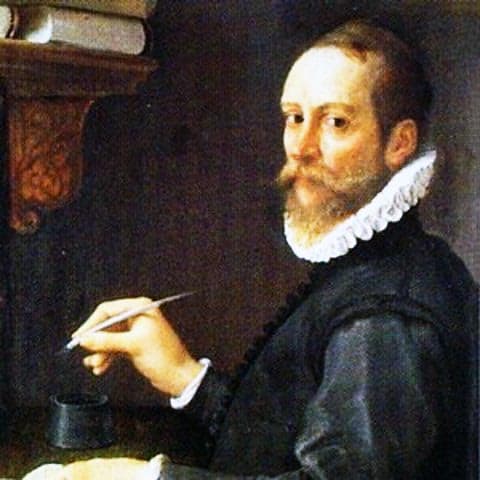
Andrea Gabrieli (c. 1532/1533 – August 30, 1585) was an Italian Renaissance composer and organist, known for his madrigals and his large-scale choral and instrumental music for public ceremonies. His finest work was composed for the acoustic resources of the Cathedral of St. Mark in Venice. He was the uncle of Giovanni Gabrieli.
In the late 1550s Gabrieli left Italy for an extended period of foreign travel. He served in the Bavarian court chapel at Munich under another great Franco-Fleming, Orlando di Lasso, then visited the court of Graz in Austria, and finally was patronized by the noble Fugger family in Augsburg. In 1564 he returned to Venice to become second organist at St. Mark’s, where he remained until 1584, when he succeeded the virtuoso performer Claudio Merulo as first organist—a position he held until his death in 1586.
Despite his profession, not much of his output in these years was organ music; there were several volumes of madrigals, socially enjoyable settings of Italian poetry to be sung at private houses or cultural academies, where musical life flourished. And there was the large-scale choral and instrumental music for ceremonies of church and state, for which Andrea is best-known today. His motets and masses exploit the tonal variety possible when instruments are added to a choir. Some of these works were published posthumously in 1587: one of the finest is the Magnificat for three choirs and orchestra, doubtless intended to be performed in St. Mark’s.
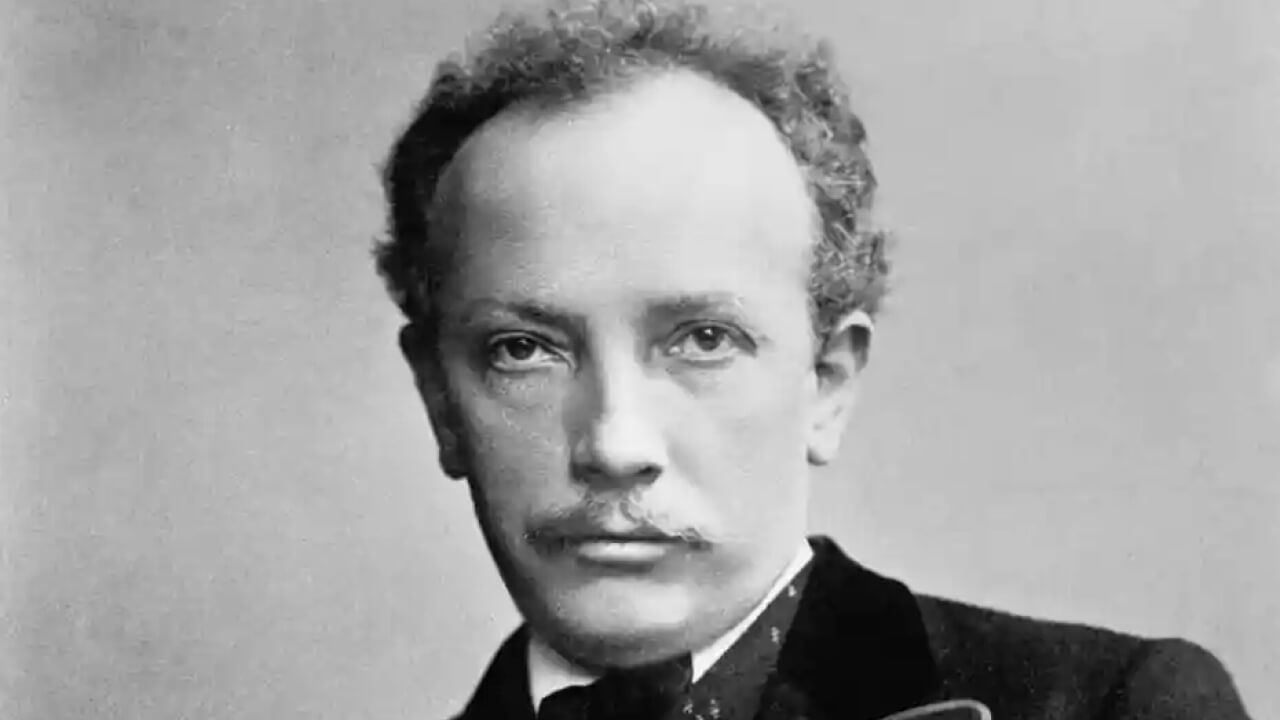
The Suite in Bb for thirteen instruments, Op. 4 (1884) was commissioned by Hans von Bülow and was premiered in Munich on November 18, 1884, with Strauss conducting the Meiningen Orchestra. Hans von Bülow had met the young composer in the winter of 1883-84 and subsequently conducted Strauss’s Serenade in Eb for thirteen instruments, Op. 7 (1881) with the Meiningen Orchestra in Berlin. The success of this work led von Bulow to commission Strauss for a work for the same set of instruments. The premiere performance, conducted by the composer without a rehearsal with the orchestra, was the first major performance in which Strauss conducted and effectively "jump started" his musical career.
Praeludium is based upon the triplet rhythm first heard in the opening measure. In contrast is an oboe solo in m. 46 which contains an ascending minor second that later on in the movement acts as a motif. Romanze begins with a clarinet cadenza-like passage followed by a plaintive melody. Contrasted with this are heroic solos in the horn and bassoon. Gavotte is loosely based on the dance originating from Bretagne of the same name. Introduction und Fuge begins with the plaintive melody from the second movement. The fugue is in ABA form with the main theme starting in the first horn.
- Notes from Great Music for Wind Band

One of the most important composers of the 19th and 20th centuries, he was considered ahead of his time, only then (around the middle of his long life) to fall behind the times. Strauss was unquestionably a great force in the musical Modern as well as a glorious summation of late-romanticism.
He was a musician's son and a prodigy who surpassed all expectations. As a conductor in Munich, Meiningen and Weimar he perfected his craft (he was regarded as one of the leading conductors of his time) and honed the skills which would prepare him for later positions as the artistic director at the Berlin Court Opera (1898 - 1918) and the Vienna State Opera (1919 - 1924).
His works include the symphonic poems Tod und Verklärung, Till Eulenspiegel and Also sprach Zarathustra, which brought him lasting fame before the turn of the century. From the first childlike attempts (Weihnachtslied, 1870) into old age (Four Last Songs, 1948), Strauss devoted himself to song composition. He was to become the unsurpassed master of the genre.
Following the revolutionary drama Salome (text by Oscar Wilde), the collaboration with Hugo von Hofmannsthal put his operatic output on a new footing. Today collaborative stage works such as Elektra, Der Rosenkavalier, Ariadne auf Naxos or Die Frau ohne Schatten are essential features of the operatic repertoire.
In 1933 the Nazi regime appointed Strauss, Germany's leading musician, as President of the Reichsmusikkammer (Reich Chamber of Musicians). Politically naive, Strauss accepted, but by 1935 he had fallen out of favour and resigned. Family reasons (his son Franz had been married to a Jew since 1924) and the financial necessity of having his works performed in Germany prevented him from breaking with the Nazi regime.
This musical giant left behind some 300 sketches along with completed works in all genres, 86 of them with opus numbers. But he left hardly any theoretical or autobiographical writings. Richard Strauss expressed his life and thoughts through art: his grand ambitions and adversaries in the tone poem Ein Heldenleben, an occasionally turbulent family life with his beloved wife Pauline (a celebrated singer in her time) in the Symphonia Domestica and the opera Intermezzo, or his love for the mountainous near his home in Garmisch in his last tone poem Alpensymphonie.

Composed in 1989, the charming and popular Concerto for Cello and Wind Orchestra exemplifies Gulda’s blurring of boundaries between musical genres. Scored for a modified eighteenth-century Harmoniemusik wind ensemble with the addition of a jazz rhythm section of guitar, bass, and drum set, the work alternates seamlessly between what Gulda described as “jazz, a minuet, rock, a smidgen of polka, a march, and a cadenza with two spots where the star cellist must improvise.” The Ouverture launches the concerto with a smooth rock feel, which then alternates with lyrical sections that sound like they could have been written by Mozart. The second-movement Idylle opens with a beautiful hymn-like chorale, first in the brass choir and then in cello, before a lilting Ländler breaks the repose.
The third movement is a six-minute cadenza for unaccompanied solo cello that calls for extended techniques and improvisation and segues directly into the Menuett. Cast in ABA form, the outer sections sound predictably like a Renaissance dance -- complete with tambourine -- but the middle section surprises with a beautiful tune that evokes Appalachian folk music. The Finale -- part march and part polka -- recalls classical and rock genres from earlier in the concerto before drawing to a thrilling close, complete with a screaming high note from the lead trumpet.
- Program Note by Travis J. Cross for the UCLA Wind Ensemble concert program, 10 March 2015
.jpg)
Friedrich Gulda (16 May 1930, Vienna – 27 January 2000, Weissenbach, Austria) was an Austrian pianist and composer who worked in both the classical and jazz fields.
Gulda began learning to play the piano from Felix Pazofsky at the Wiener Volkskonservatorium, aged 7. In 1942, he entered the Vienna Music Academy, where he studied piano and musical theory under Bruno Seidlhofer and Joseph Marx.
He won first prize at the Geneva International Music Competition in 1946. Gulda began to play concerts worldwide. He made his Carnegie Hall debut in 1950. Together with Jörg Demus and Paul Badura-Skoda, Gulda formed what became known as the "Viennese troika".
Although most famous for his Mozart and Beethoven interpretations, Gulda also performed the music of J. S. Bach (often on clavichord), Schubert, Chopin, Schumann, Debussy and Ravel. His recordings of Bach's Well Tempered Clavier are well regarded by collectors.
From the 1950s on Gulda cultivated an interest in jazz, writing several songs and instrumental pieces, and at times combining jazz and classical music in his concerts. In 1956, he performed at Birdland in New York City and at the Newport Jazz Festival. He organized the International Competition for Modern Jazz in 1966, and he established the International Musikforum, a school for students who wanted to learn improvisation, in Ossiach, Austria, in 1968 He once said: "There can be no guarantee that I will become a great jazz musician, but at least I shall know that I am doing the right thing. I don't want to fall into the routine of the modern concert pianist's life, nor do I want to ride the cheap triumphs of the Baroque bandwagon."
In jazz, he found "the rhythmic drive, the risk, the absolute contrast to the pale, academic approach I had been taught." He also took up playing the baritone saxophone. Gulda wrote a Prelude and Fugue with a theme suggesting swing. Keith Emerson performed it on Emerson, Lake & Palmer's The Return of the Manticore. In addition, Gulda composed Variations on The Doors' 'Light My Fire'. In 1980, he wrote his Concerto for Cello and Wind Orchestra, which has been called "as moving as it is lighthearted", in five movements "involving jazz, a minuet, rock, a smidgen of polka, a march and a cadenza with two spots where a star cellist must improvise."
In 1982, Gulda teamed up with jazz pianist Chick Corea. In the late 1990s, Gulda organised rave parties, where he performed with the support of several DJs and Go-Go dancers. These unorthodox practices along with his refusal to follow clothing conventions (he was notoriously described as resembling, in one South German concert, "a Serbian pimp") or announce the program of his concerts in advance earned him the nickname "terrorist pianist".
His piano students included Martha Argerich, who called Gulda "my most important influence," and the conductor Claudio Abbado.
He expressed a wish to die on the birthday of Mozart, the composer he most adored, and did so.
.png)
Weekday Box Office & Administrative Offices
301 9th Street, Suite 302
Redlands, CA 92374
When visiting, please enter through Door 300.


