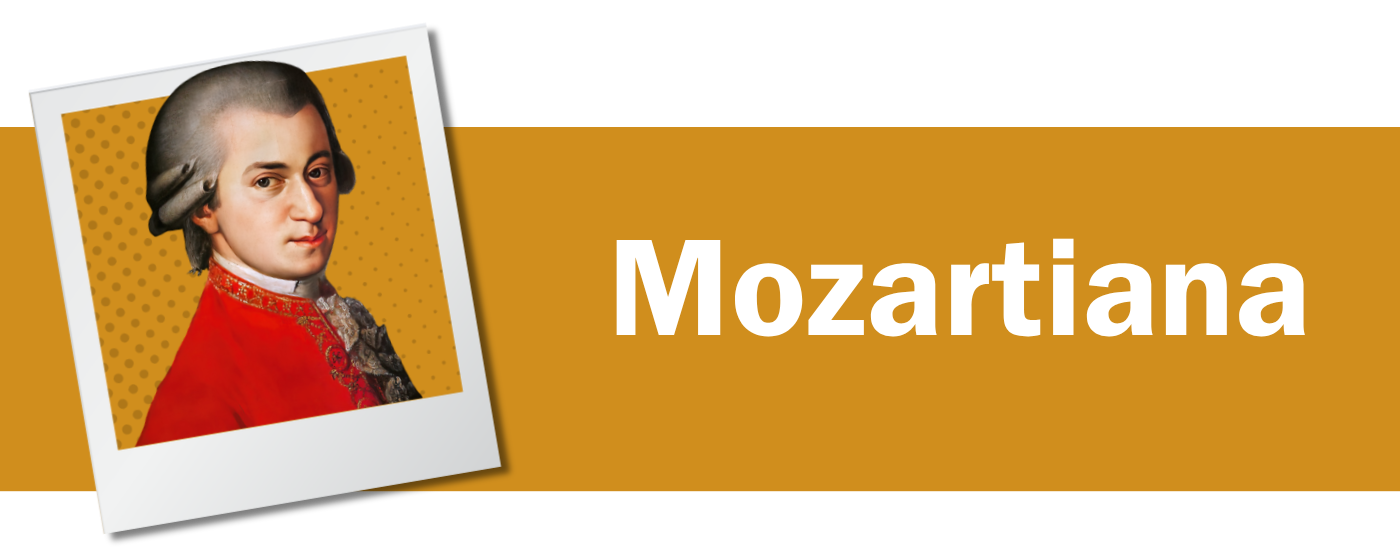


Mozart’s practical involvement with the violin began at an early age. His father Leopold (1719-1787), who was himself an excellent violinist and accomplished composer of both religious and secular music, was also the author of a highly esteemed didactic work on violin technique, A Treatise on the Fundamentals of Violin Playing, published in 1756, the year of his son’s birth. (The treatise is still an important source for the study of the musical practice of the time.) Wolfgang began lessons with his father in 1762, and was soon actively participating in making music with his father’s colleagues and friends. During these sessions he was introduced to the music of two of Italy’s finest violinist composers, Giuseppe Tartini (1692-1770) and Pietro Locatelli (1695-1764). In 1769 he entered into the service of the Archbishop of Salzburg as both concertmaster and composer.
Between the years 1769 and 1773 Mozart made three separate journeys with his father to Italy. It was a period in which he spent much time studying and composing dramatic works for the stage as well as sacred works, but it was also a time of exposure to one of Italy’s finest violin virtuosi, Pietro Nardini (1722-1793). In addition, Mozart had befriended Thomas Linley, a young Englishman and gifted student of Nardini. In a letter to his wife, dated Rome, April 21, 1770, Leopold describes the friendly bond between the two boys: “In Florence we met a young Englishman, a pupil of the famous violinist Nardini. The lad, who plays very finely and is of Wolfgang’s age and height, came to the house of the learned poetess Signora Corilla… The two boys performed by turns throughout the evening amidst continual embracing. The other day the little Englishman, a most charming lad, had his violin brought to us and played all the afternoon, Wolfgang accompanying him, also on the violin. The following day we dined with M. Gavard…and the two children played by turns the whole afternoon, not like boys but like men!” The experience of making music with Linley, and that of Nardini’s playing, increased Mozart’s interest in perfecting his own playing, but more importantly, it became an impetus for him to begin to compose seriously for the violin.
This emphasis on music for violin and strings culminated in 1775 when, in the course of nine months (April - December), he composed five concertos for violin and orchestra.
In these five violin concertos, as with much of the music Mozart composed during his “apprentice” period, his first attempts seem groping until he fully assimilated the material and gained complete mastery of the form. Such is the case with the first two concertos, K. 207 and 209, wherein Baroque and Rococo characteristics dominate. Again, the works of such composers as Nardini, Boccherini (1743-1805), and Tartini provide the models for these two concertos. But as usual, Mozart was to transcend the limits of these models. Especially in his Violin Concerto No. 5 in A, K. 219, Mozart demonstrates great imagination in his experimentation with fluctuating tempos and diverse meters within single movements. Such freedom in his handling of material expresses not only an originality of form, but also Mozart’s knowledge and command of both the Italian and French styles, a demonstration of his cosmopolitanism at the age of 19!
The first movement of Concerto No. 5 quickly presents us with formal peculiarities that are odd for the period. Following the tutti exposition, the solo violin enters with a tempo change from Allegro aperto to Adagio, completely altering the mood. When the allegro returns we discover that what appeared to be the first theme of the Concerto (a rising arpeggio in the violins) turns out to be an accompaniment to what is the true first theme stated in the solo violin. Aside from these anomalies, the remainder of the first movement follows the processes of sonata form.
The Adagio, in E major, is a three-part song form of a lyrical and contemplative nature. In the finale, labeled Rondeau, Mozart tips his hat to French models. But the uniqueness of this movement stems from the introduction of a simultaneous meter and tempo change as well as a change of key to A minor.
This is an episode in the alla turca style, which was popular in opera at the time. Mozart achieves this effect not only by changing the mode to minor, but above all through his requiring the cellos and basses to play coll’ arco al roverscio, meaning “play with the wood of the bow,” thereby producing a percussive sound. The movement ends quietly with the last statement of the theme.
–Steve Lacoste

Hello, Redlands. My name is De Ann Letourneau. I'm your soloist tonight — and I want to tell you something that most classical musicians would never put in their bio.
I grew up in Superior, Wisconsin. Small town. Cold winters. Snowmobiles in the backyard. My dad ran his own upholstery business. My mom stayed home, raised three kids, and sang to us every single day — making up songs on the piano before I could even walk. I apparently started singing along before I turned one. My grandma Vivi heard piano playing in the background during a phone call once and said to my mom, "Oh, how nice that you're playing for De Ann." My mom said, "That IS De Ann."
Music was always in me. But the violin? That came later — and accidentally.
I was eight years old when musicians from the Duluth-Superior Symphony came to my school and I decided, completely and immediately, that the violin was what a princess would play. I took it home in a beat-up brown case that said "Bryant School" on the side and handed my mom a permission slip. She looked at me and said, "If you want to do this, you're on your own — I don't know how to play that." And then she signed it. And they supported me every single step of the way, even though they had no idea where it was going.
But here's the thing — I wasn't really a violinist yet. I sat in the back of the second violins. I played by ear. I couldn't really read music. I was also a competitive figure skater, and that was my real world until an injury at thirteen changed everything.
The summer I was thirteen, bored and moping around the house with no skating and no direction, my parents sent me to Symphony School of America in Dodgeville, Wisconsin. I walked into my first sectional — Tchaikovsky Symphony No. 6, third movement — and saw notes I had never seen in my life. Tiny, fast, terrifying. I almost walked out. Instead I walked up to the faculty after the break and told them I didn't belong there.
They disagreed.
Two extraordinary musicians — violinist Alphonse Carlo and James Pipkin, Principal Second of the Birmingham Symphony — saw something in me that I couldn't see in myself. They kept me in the first violin section. They taught me to fake it until I could play it. They called my hometown teacher, Diane Balko, Concertmaster of the Duluth-Superior Symphony, and told her she needed to hear me. And there's a photograph from that summer — me in a rainbow hearts shirt with a terrible perm, standing next to a tall, dark, handsome violinist named Charles Rex, who would go on to become Associate Concertmaster of the New York Philharmonic for nineteen years — taken right after the masterclass where he gave a thirteen-year-old girl from Wisconsin the confidence to play in front of everyone.
That was the moment.
By fourteen I was studying seriously with Diane Balko — one year of nothing but scales and études, learning to hold the violin properly. By sixteen I had won my first professional orchestral position with the Duluth-Superior Symphony, becoming the youngest musician ever hired in the orchestra's history, joining the musicians union with a full contract in 1984 — a distinction I still hold today and one that makes me, rather proudly, a union member of 42 years and counting. By twenty I had won first prize at the Starling International Violin Competition in Aspen, Colorado, earned a full scholarship to the University of Cincinnati College-Conservatory of Music, and found myself in the studio of the legendary Dorothy DeLay.
I tell you all of this not to impress you. I tell you because if you are sitting in this gorgeous chapel tonight and you think your town is too small, your start too late, your resources too limited — I want you to know that I thought all of those things too.
Las Vegas found me — or maybe I found it — because it reminded me of that summer in Dodgeville. Wide open. Unwritten. A place where you don't have to follow anyone else's map because the map hasn't been drawn yet. For over three decades I have called Las Vegas home, and for nearly 28 of those years I have served as Concertmaster of the Las Vegas Philharmonic — with the extraordinary privilege of performing everywhere from the Grammy stage to the Broadway pit to the concert hall — with everyone from Andrea Bocelli to NAS to Danny Elfman to the Eagles.
And tonight I get to play Mozart. In a chapel. With my dear friend Kevin Eberle-Noel — whose vision and leadership have made the Redlands Symphony something truly special — and under the baton of the extraordinary Maestro Deanna Tham, whose historic appointment as the first woman to lead a major orchestra in the Inland Empire is exactly the kind of moment that reminds us all why we do this.
Two De Anns and a Mozart concerto. I can't think of a more perfect evening.
Thank you for having me. I can't wait to share this music with you.

Don Giovanni is truly one of the great operas ever written, and its Overture alone is a masterpiece. Its premiere in Prague in 1787 was an ecstatic success and the opera is now a cornerstone in the repertoire for its outstanding music and exceptional lyrics by Lorenzo Da Ponte.
Mozart’s Giovanni tells the tale of the fabled but fictitious Spanish womanizer, Don Juan (Don Giovanni in Italian) who whisks through numerous romantic conquests and other adventures with his comical sidekick, Leporello. But Giovanni’s reckless ego eventually leads to his murdering the Commendatore (Knight Commander), the father of one of his seductions. The opera’s final scene brings the Commendatore back from the dead to drag the unrepentant Giovanni down into the fires of Hell.
A foreshadowing of Giovanni’s tragic end is where the Overture begins. Opening with fortissimo and menacing chords in the full orchestra – a heralding of the terror to come – the winds then echo those chords quietly, while the upper strings pulse like a nervous, beating heart. Tension builds until the flutes and first violins begin a series of eerily ascending and descending scales that amplify a feeling of dread. But just as Giovanni so often turned his gaze from the pain he had caused, the music does the same. The Overture suddenly springs musically into the gaiety of Giovanni’s life before all that terrible life-reckoning, full of his devil-may-care attitude, his twinkling bravura and tempestuous ego, and all those complicated romantic entanglements. Its first theme speaks volumes – first heard in the violins, the theme moves upwards into several syncopated rhythms, just as if the arrogant Giovanni is dismissively flitting his hands to either side. But the energy never stops in this brief masterpiece, as Mozart captures a gallantry and joie de vivre all the way until the last, defiant chords.
© Max Derrickson

A musical prodigy from the age of six, Mozart is considered by many to be the greatest musician of all time. His legions of works include famous pieces for symphonies and operas, choral and piano; nearly every one is considered a masterpiece of the classical music form.
International acclaim is nothing new for Mozart. Believing him a gift of God, his father exhibited Mozart’s manifest talents to the world. Acclaimed in his own era, Mozart was well regarded as a man of unique musical abilities and talents by his contemporaries.
His works were prodigious. Beginning at age 10, Mozart composed fifty symphonies during his life. In his youth, he was knighted by the Pope and performed for the King and Queen of England. Gifted with “perfect pitch,” Mozart’s inborn abilities as a natural musician became increasingly evident the older he grew. Other seemingly supernatural gifts were equally stunning. It was not uncommon for young Mozart to pick up an instrument and play it without a single lesson.
At twenty-five, Mozart married and settled in his homeland of Austria. Although Emperor Joseph of Austria briefly employed him, Mozart struggled to clothe and feed his family. Ironically enough, the emperor clothed Mozart in fine apparel and bestowed upon him the gift of a large ring to be worn during performances.
Mozart wrote every genre of music known to him, including symphonies, concertos, chamber music, church music, operas, and operettas—most of which are regarded as masterpieces today. Among his most acclaimed works are the operas Don Giovanni, The Magic Flute, and The Marriage of Figaro. Although Mozart died at the age of thirty-five, his legacy on western music is profound: not just in terms of sheer numbers, but in their emotional impact, his works include the frivolous and lively to the solemn and morose.
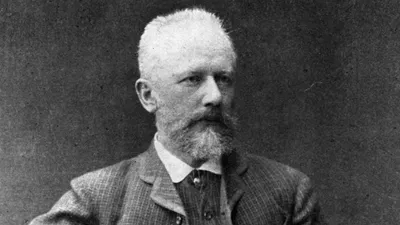
Tchaikovsky conceived the notion of creating a Mozart-derived work in 1884, when he heard a performance of Beethoven’s First Symphony and was “surprised” (his expression) that he had liked it, despite it not being Beethoven of the titanic sort. In a letter written to composer Sergei Taneyev at the time, he attributes this to his belief that, “It must be because it resembles my god, Mozart.” Tchaikovsky could not, however, get his Mozartian act together until the time came for a celebration of the centennial of the completion of Don Giovanni, to take place in Moscow on November 8, 1887, [the opera was actually completed on October 28, 1787]. The first performance of this Suite took place at a concert devoted entirely to Tchaikovsky’s music on November 26 in Moscow, conducted by the composer.
“I am occupying myself about an hour each day with orchestrating the Mozart piano pieces,” he wrote from a spa in the Caucasus in July of 1887 to his publisher, Jurgenson. “I think there’s a great future, especially abroad, for this suite, thanks to a successful choice of pieces and the novelty of its character: the old given a contemporary treatment.”
And an imaginative choice of pieces it is: for movements one and two respectively, the delectably odd Gigue in G, K. 574, and the even quirkier piano Minuet in D, K. 355 (whose trio, which was provided after Mozart’s death by the Abbé Stadler, was not used by Tchaikovsky), — each only a page long in the original and both richly (Romantically?) chromatic; for movement three, the sublime motet Ave verum corpus for chorus, strings, and organ, K. 618; and for the grand finale, his own variations on Mozart’s variations, K. 455, on “Unser dummer Pöbel meint,” an aria from an opera by Gluck. The version of Ave verum corpus employed is in itself a curiosity: Liszt’s arrangement, as “Preghiera” (Prayer), for piano solo, with his own introduction and coda added.
Tchaikovsky prefaced the score of “Mozartiana” with the following: “A great many of Mozart’s short pieces are, for some incomprehensible reason, little known — not only to the public but to musicians as well. The author who has arranged this suite, entitled ‘Mozartiana,’ had in mind to provide a new occasion for the more frequent performance of these pearls of musical art, unpretentious in form, but filled with unrivalled beauties.”
—Herbert Glass
.jpg)
Born on May 7, 1840, in Votkinsk in the Vyatka district of Russia, Pyotr Ilyich Tchaikovsky was the son of a successful engineer. Pyotr and his brothers and sister received a sound education from their French governess. His parents sometimes took him to concerts, and after one such evening he complained that he could not fall asleep because of the music stuck in his head. He was devoted to his mother, and at age four he and his sister composed a song for her. Her death when he was fourteen was a huge blow to him.
Tchaikovsky attended law school in St. Petersburg, Russia, and, while studying law and government, he took music lessons, including some composing, from Gabriel Lomakin. Tchaikovsky graduated at the age of nineteen and took a job as a bureau clerk. He worked hard, but he hated the job; by this time he was totally absorbed by music. He soon met the Rubinstein brothers, Anton (1829–1894) and Nikolai (1835–1881), both of whom were composers. Anton was a pianist second only to Franz Liszt (1811–1886) in technical brilliance and fame. In 1862 Anton opened Russia's first conservatory (a school that focuses on teaching the fine arts), under the sponsorship of the Imperial Russian Music Society (IRMS), in St. Petersburg. Tchaikovsky was its first composition student.
Tchaikovsky's early works were well made but not memorable. Anton Rubinstein was demanding and critical, and when Tchaikovsky graduated two years later he was still somewhat frightened by Anton's harshness. In 1866 Nikolai Rubinstein invited Tchaikovsky to Moscow, Russia, to live with him and serve as professor of composition at the Moscow Conservatory, which he had just established. Tchaikovsky's father was now in financial (money-related) trouble, and the composer had to support himself on his meager earnings from the conservatory. The musical poems Fatum and Romeo and Juliet that he wrote in 1869 were the first works to show the style he became famous for. Romeo and Juliet was redone with Mily Balakirev's (1837–1910) help in 1870 and again in 1879.
During the 1870s and later, there was considerable communication between Tchaikovsky and the Rubinsteins on the one hand and the members of the "Mighty Five" Russian composers — Balakirev, Aleksandr Borodin (1834–1887), Modest Mussorgsky (1839–1881), Nicolai Rimsky-Korsakov (1844–1908), and César Cui — on the other. It was widely reported that the two groups did not get along, but this was not true. Tchaikovsky worked as an all-around musician in the early 1870s, and, as was expected of a representative of the IRMS, he taught, composed, wrote critical essays, and conducted (although he was not a great conductor). In 1875 he composed what is perhaps his most universally known and loved work, the Piano Concerto No. 1. Anton Rubinstein mocked the piece, although he himself often performed it years later as a concert pianist. Also popular was Tchaikovsky's ballet Swan Lake (1876). It is the most successful ballet ever written if measured in terms of broad audience appeal.
In 1877 Tchaikovsky married the twenty-eight-year-old Antonina Miliukova, his student at the conservatory. It has been suggested that she reminded him of Tatiana, a character in his opera Eugene Onegin. His unfortunate wife, who became mentally ill and died in 1917, not only suffered rejection by her husband but also the vicious criticism of his brother Modeste Tchaikovsky. Modeste, like Pyotr, was a misogynist (one who hates women). Modeste attacked Antonina in a biography he wrote about Pyotr. This was an attempt to shield Pyotr and mask his weaknesses. Later biographers repeated and even exaggerated Modeste's claim that Antonina was cheap and high-strung.
Tchaikovsky never stuck around to find out what she was like. Within a few weeks he had fled Moscow alone for an extended stay abroad. He made arrangements through his relatives to never see his wife again. In his correspondence of this period — indeed through a large part of his career — he was often morbid (gloomy) about his wife, money, his friends, even his music and himself. He often spoke of suicide. This, too, has been reported widely by Tchaikovsky's many biographers. Even during his life critics treated him unkindly because of his open, emotional music. But he never sought to change his style, though he was dissatisfied at one time or another with most of his works. He also never stopped composing.
Tchaikovsky became involved in another important relationship at about the same time as his marriage. Through third parties an unusual but helpful arrangement with the immensely wealthy Nadezhda von Meck was made. She was attracted by his music and the possibility of supporting his creative work, and he was interested in her money and what it could provide him. For thirteen years she supported him at a base rate of six thousand rubles a year, plus whatever "bonuses" he could manage to get out of her. He was free to quit the conservatory, and he began a series of travels and stays abroad.
Von Meck and Tchaikovsky purposely never met, except for one or two accidental encounters. In their correspondence Tchaikovsky discusses his music thoughtfully; in letters to his family he complains about her cheapness. He dedicated his Fourth Symphony (1877) to her. Tchaikovsky finished Eugene Onegin in 1879. It is his only opera generally performed outside the Soviet Union. Other works of this period are the Violin Concerto (1881), the Fifth Symphony (1888), and the ballet Sleeping Beauty (1889).
Tchaikovsky's fame and his activity now extended to all of Europe and America. To rest from his public appearances he chose a country retreat in Klin near Moscow. From this he became known as the "Hermit of Klin," although he was never a hermit. In 1890 he finished the opera Queen of Spades, based on a story by the Russian poet Aleksandr Pushkin (1799–1837). Tchaikovsky was happy when, despite the criticism of "experts," the opera was well received. In late 1890 Von Meck cut him off. He had reached the point where he no longer depended on her money, but he was still upset by her rejection. Even his brother Modeste expressed surprise at his anger. Tchaikovsky had an immensely successful tour in the United States in 1891.
The Sixth Symphony was first heard in October 1893, with the composer conducting. This work, named at Modeste's suggestion Pathétique, was poorly received — very likely because of Tchaikovsky's conducting. Tchaikovsky never knew of its eventual astonishing success, for he contracted cholera (a disease of the small intestine) and died, still complaining about Von Meck, on November 6, 1893.
.png)
Weekday Box Office & Administrative Offices
301 9th Street, Suite 302
Redlands, CA 92374
When visiting, please enter through Door 300.


.jpg)